Cognitive is a narrative-driven game project focused on exploration, environmental storytelling, and progressive gameplay teaching.
I led level design and environment production, developing spaces from early greybox through final implementation while also contributing to game design, 3D asset production, production coordination, and playtesting.
02 / CONTRIBUTIONS
Project Metadata
Role
Team Lead / Level Designer / 3D Artist / Producer
Engine / Tools
Unity
Duration
2025–Present
Responsibilities
Level Design · Environment Art · Game Design · Production · Playtesting
03 / GREYBOX TO FINAL ENVIRONMENT
Level Design Process
01TEACH→
02REUSE→
03EXTEND
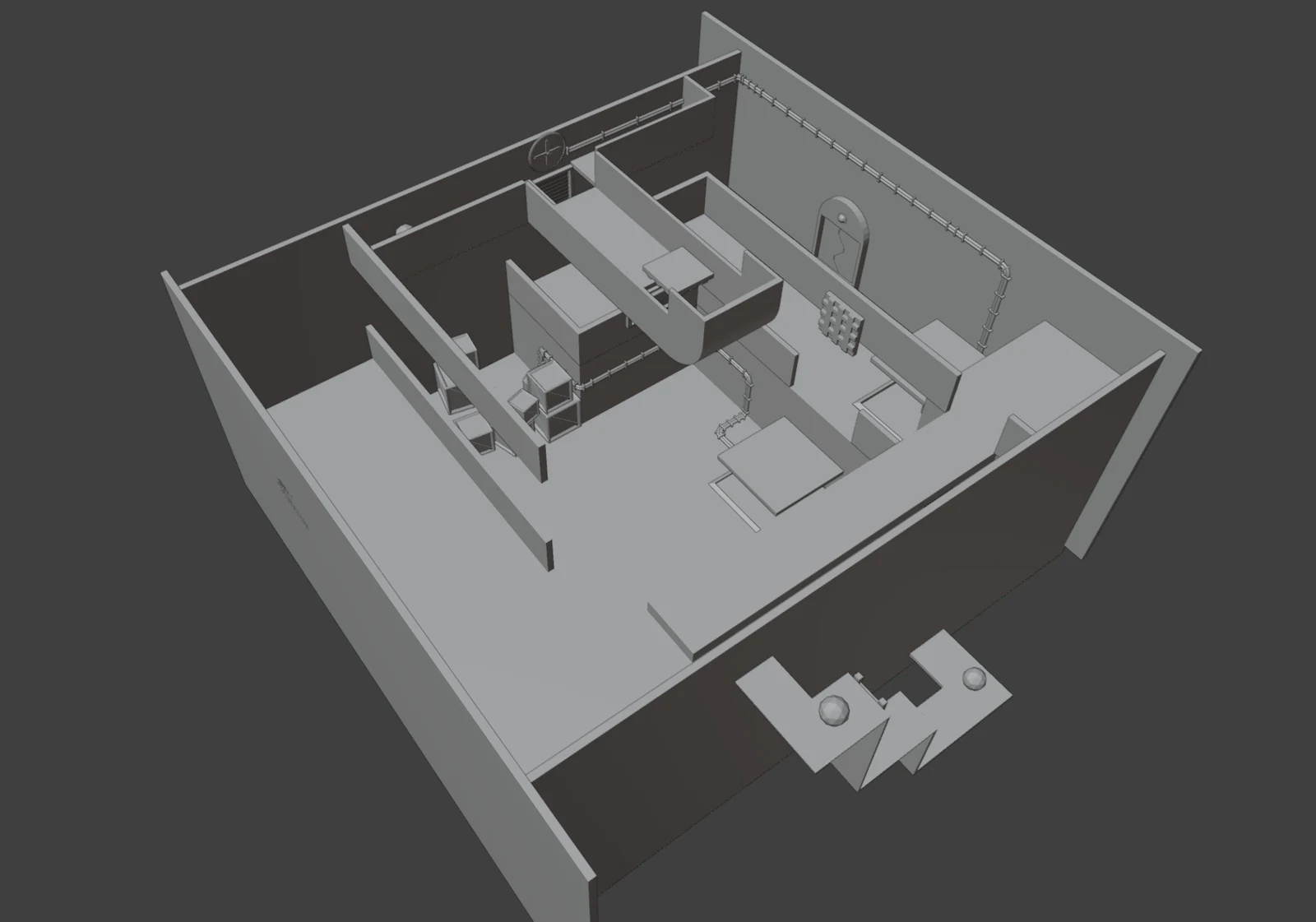
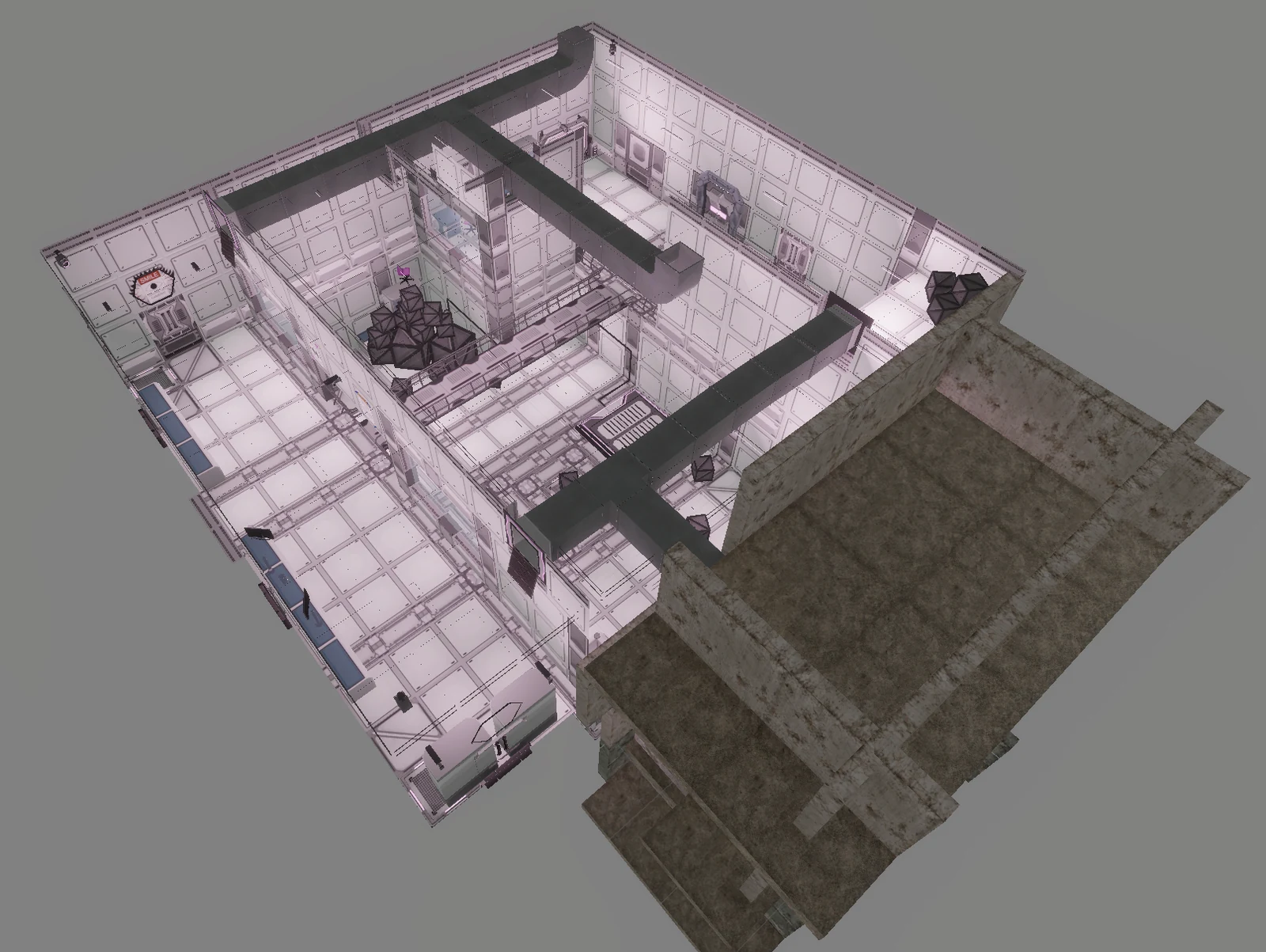
Three spaces form a deliberate teaching progression: introduce the battery interaction, reuse it as a limited resource, then extend the energy system into ranged spatial puzzles.
SPACE 01 / TEACH
Introducing the Battery Mechanic
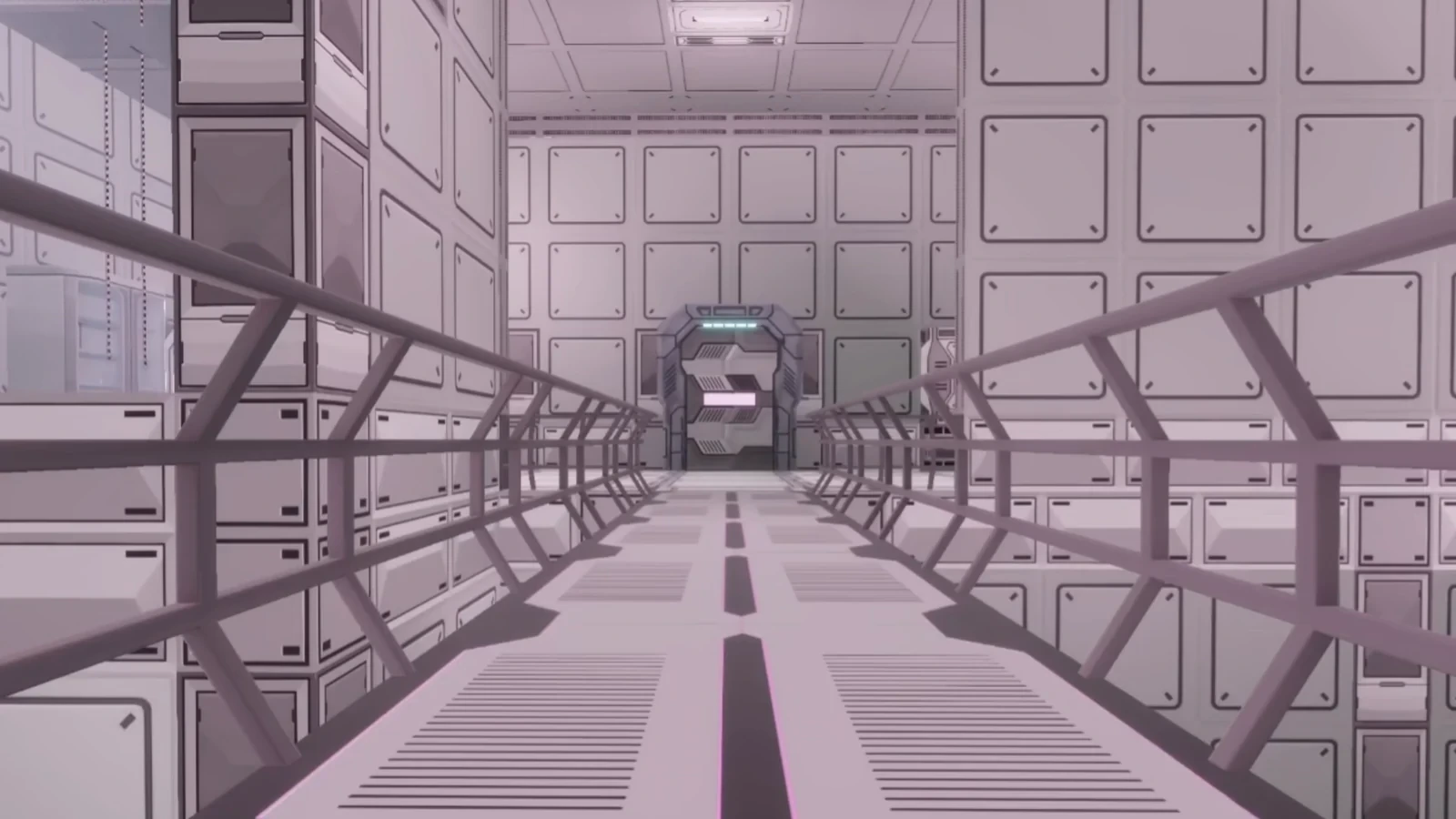
Space 01 introduces the battery mechanic with minimal complexity. As the player crosses the bridge, a scripted event drops a battery from a ventilation duct, using sound and movement to attract attention. Picking it up and inserting it into a nearby slot opens the way forward, teaching the core interaction before further complexity is introduced.
Greybox
Final
Design goal
Introduce the battery interaction with minimal complexity.
Greybox focus
Establish a clear traversal path and place the mechanic directly within the player’s route.
Final implementation
Use a scripted drop, sound cue, and nearby battery slot to attract attention and teach the interaction through play.
SPACE 02 / REUSE
Reusing a Limited Resource
Space 02 reframes the battery from a one-time key into a reusable resource. Players must recognize that batteries can be removed from powered slots, then redistribute two batteries between multiple doors to progress. The puzzle tests understanding of the system rather than repetition of the first interaction.
Greybox
Final
Design goal
Teach the player that batteries remain reusable after activation.
Greybox focus
Create a sequence of gates that requires the same limited resources to be reassigned.
Final implementation
Use two batteries across multiple powered doors so progression depends on understanding resource reuse.
SPACE 03 / EXTEND
Extending the Energy System into Remote Interaction
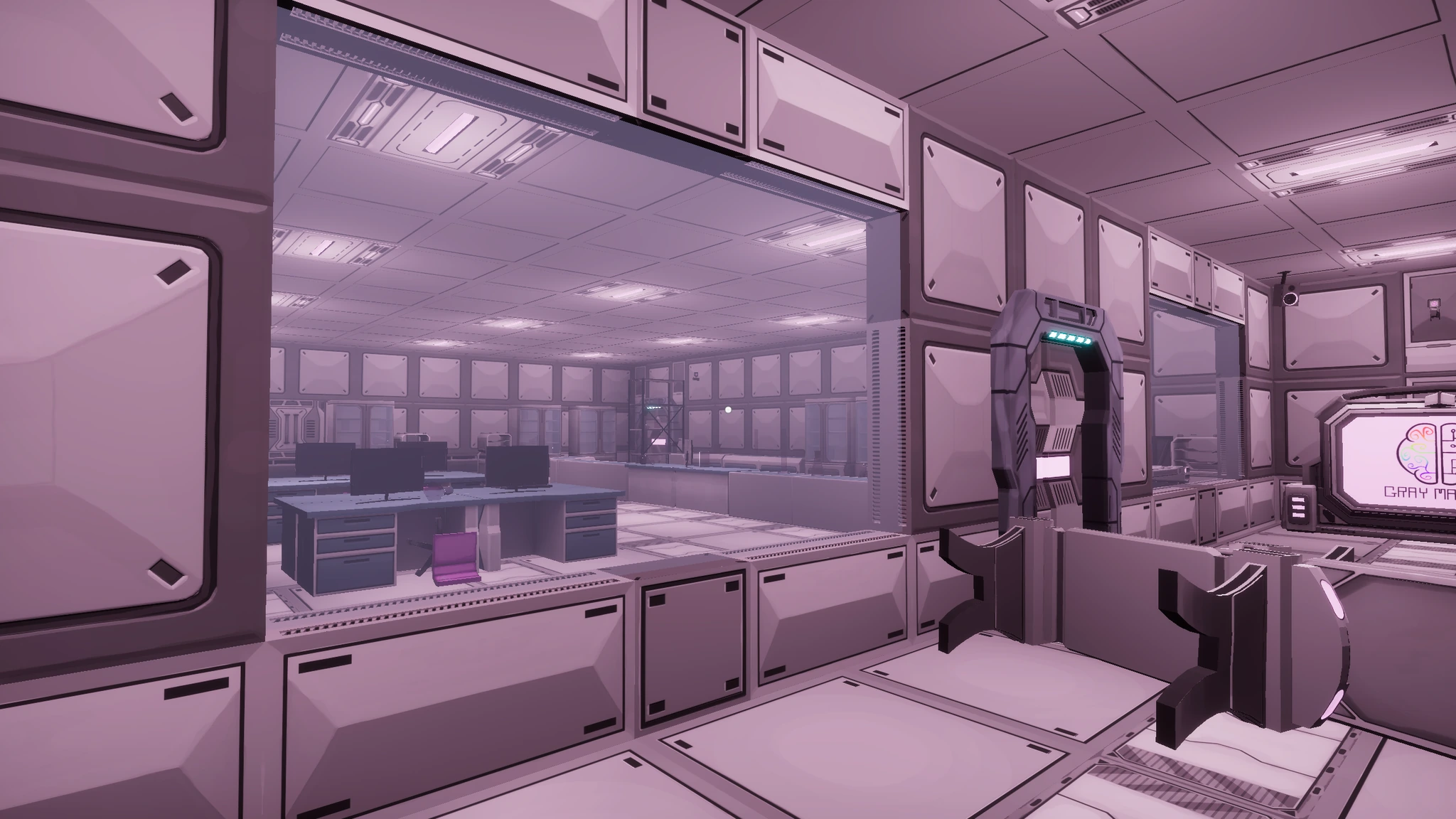
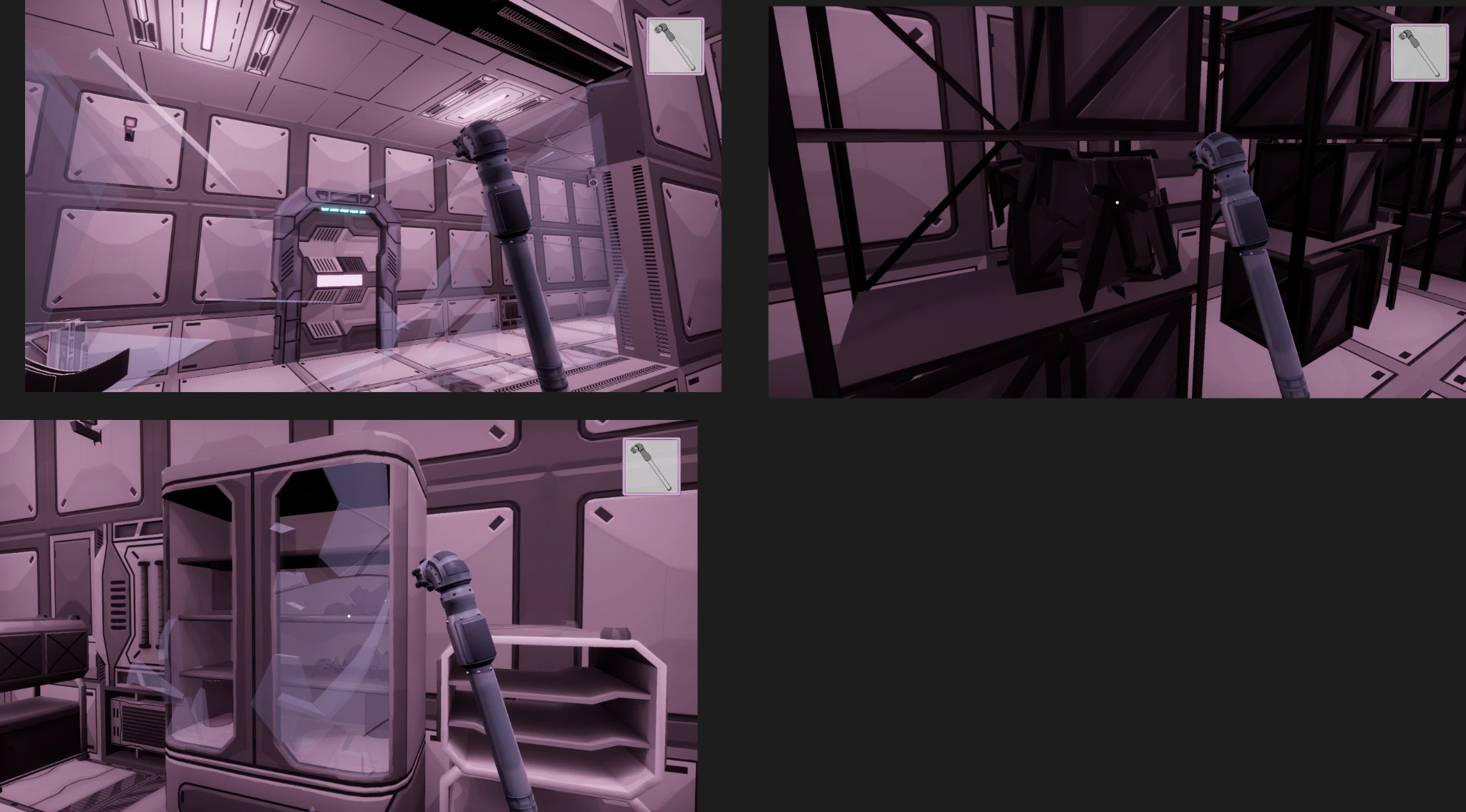
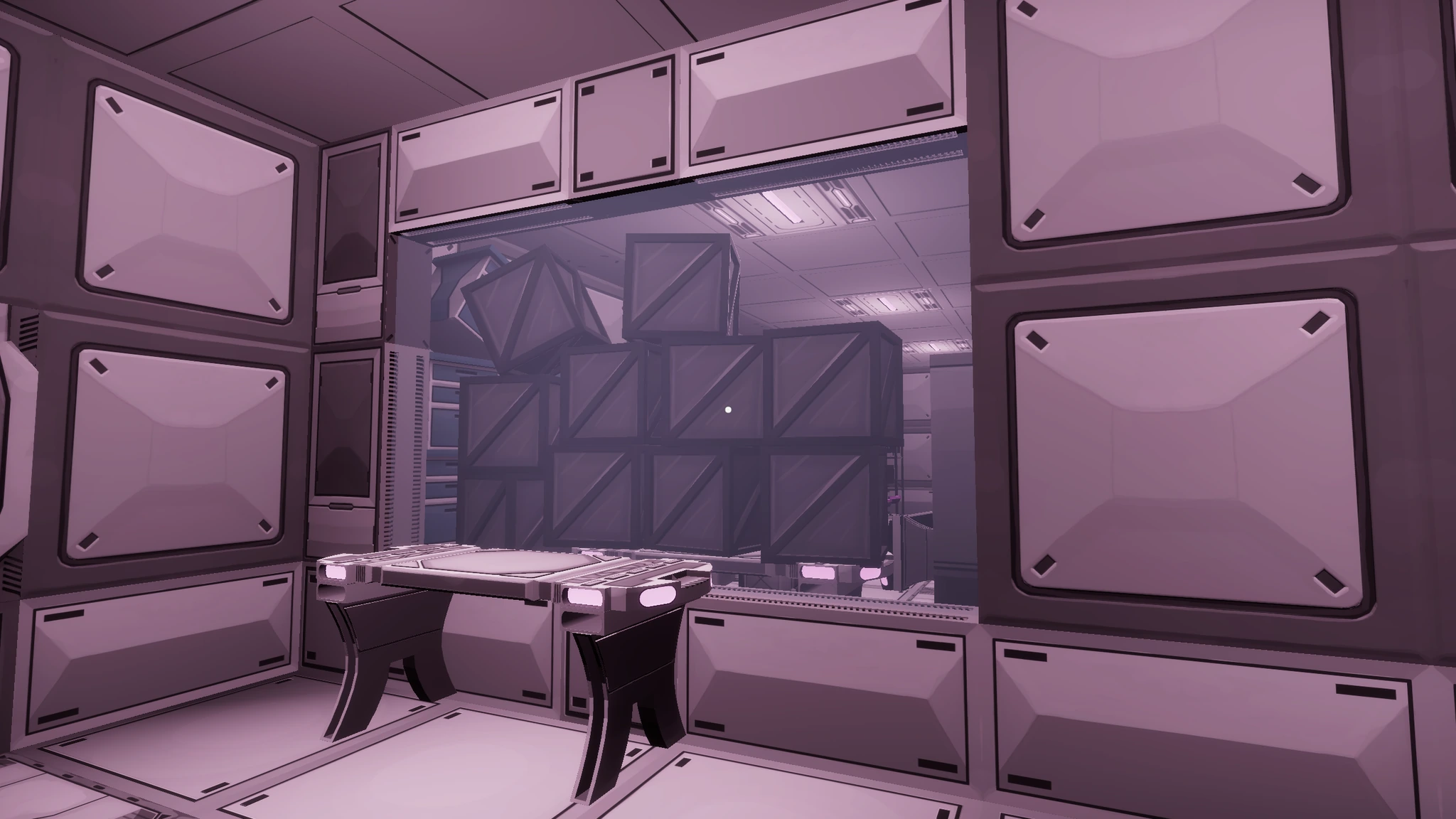
Space 03 extends the established energy system into ranged interaction. The player gains an energy gun whose energy-ball projectiles activate slots much like batteries. Energy can travel through windows or openings to reach targets the player cannot physically access.
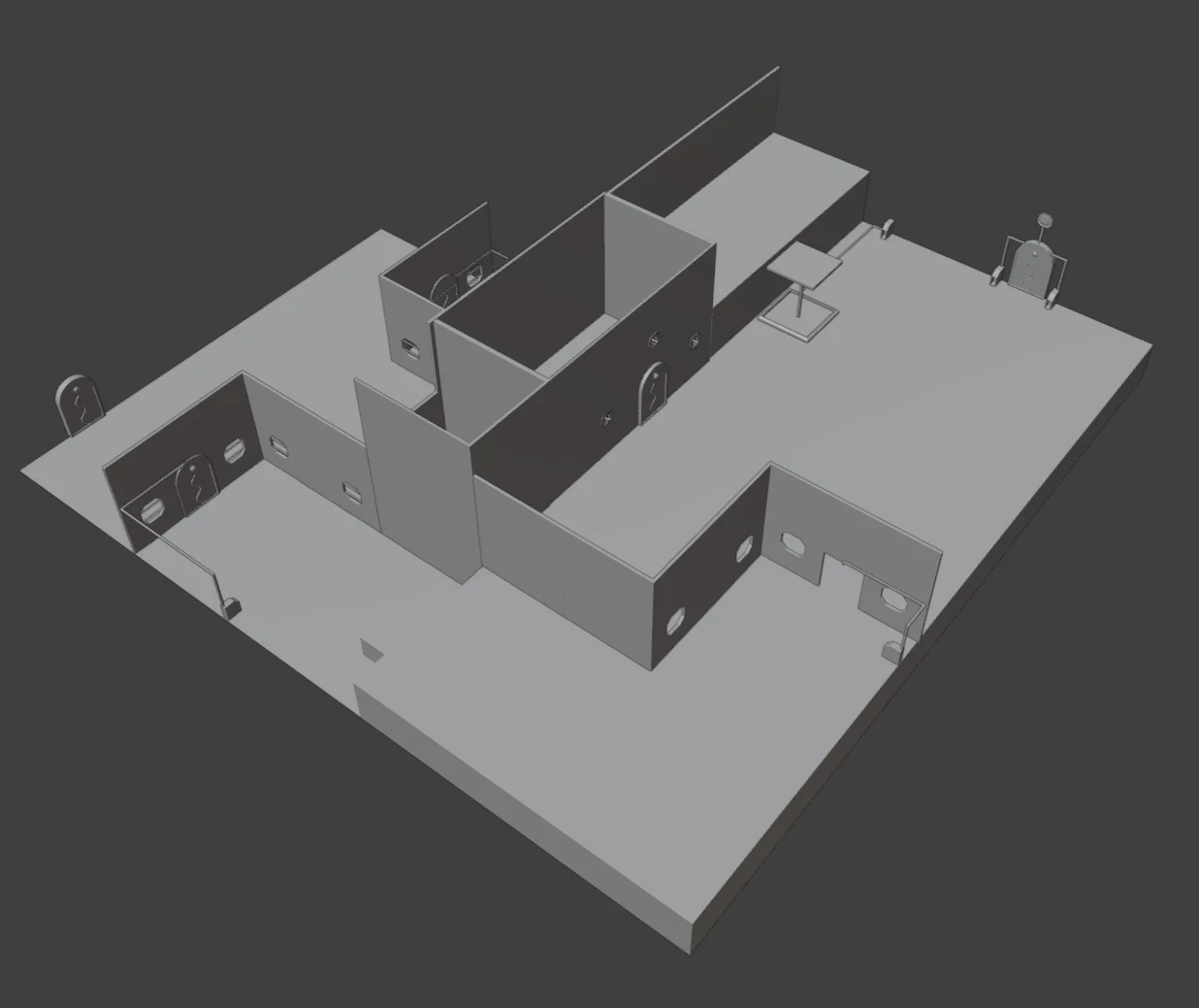
Greybox
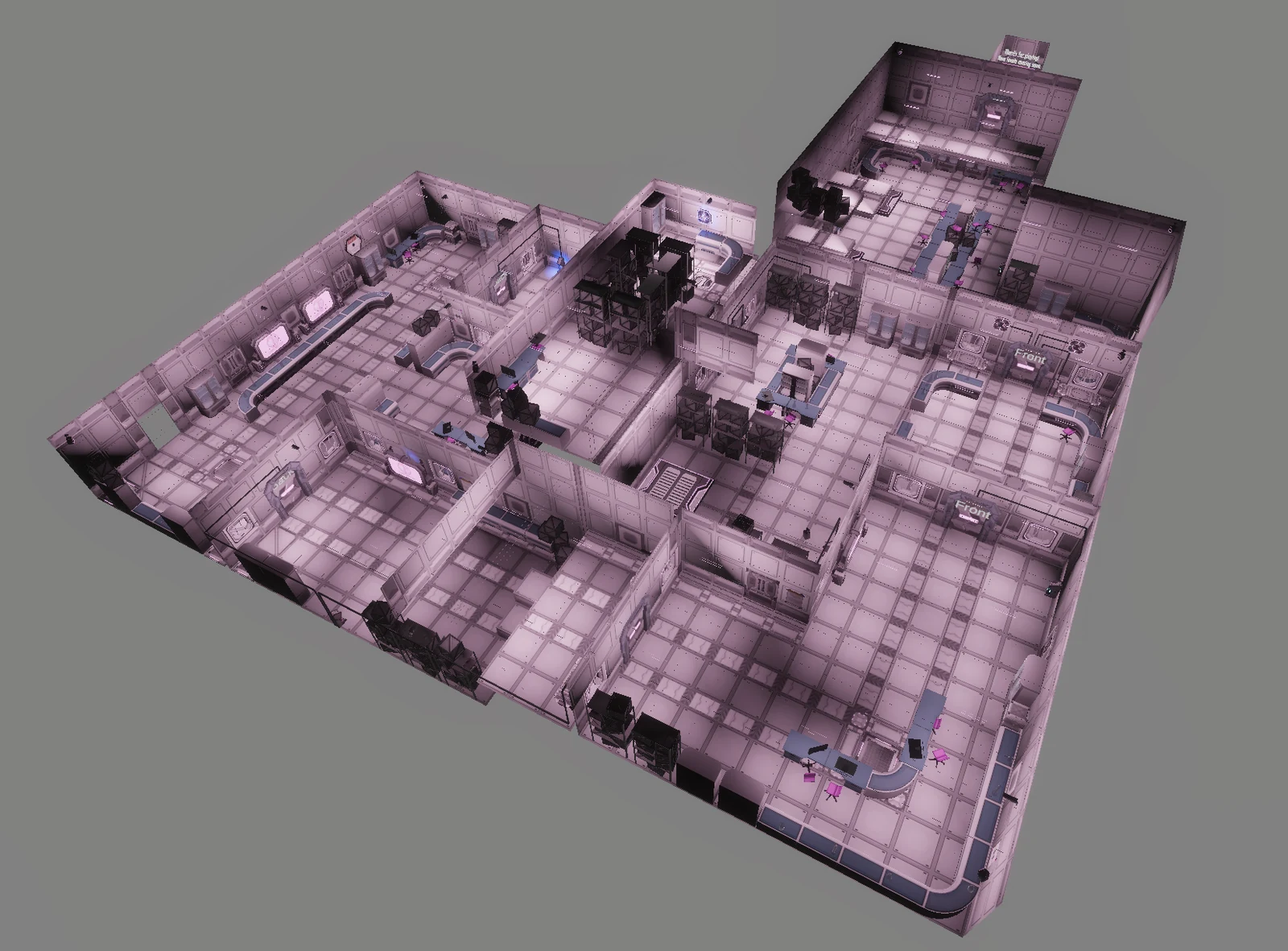
Final
Design goal
Extend the established energy system into ranged spatial problem-solving.
Greybox focus
Create sightlines and separated spaces where the player can see a target without directly reaching it.
Final implementation
Use the energy gun to allow projectiles to travel through windows and activate remote energy slots.
The camera positions differ between greybox and final views.
04 / FROM CUES TO SCRIPTED STAGING
Spatial / Player Guidance
Four examples trace the progression from an unresolved visual cue to learned interactions, curiosity-driven exploration, and predictable movement for a scripted event.
A narrow linear path, a centered destination door, and minimal competing visual information create a strong directional space.
Expected movement
Walk directly toward the door. This predictable route supports the staging of a scripted event.
Scripted sequence
Player crosses the bridge → CG / scripted event triggers → bridge collapses → player falls.
05 / EARLY DEVELOPMENT → LATER PLAYABLE BUILD
Iteration & Development
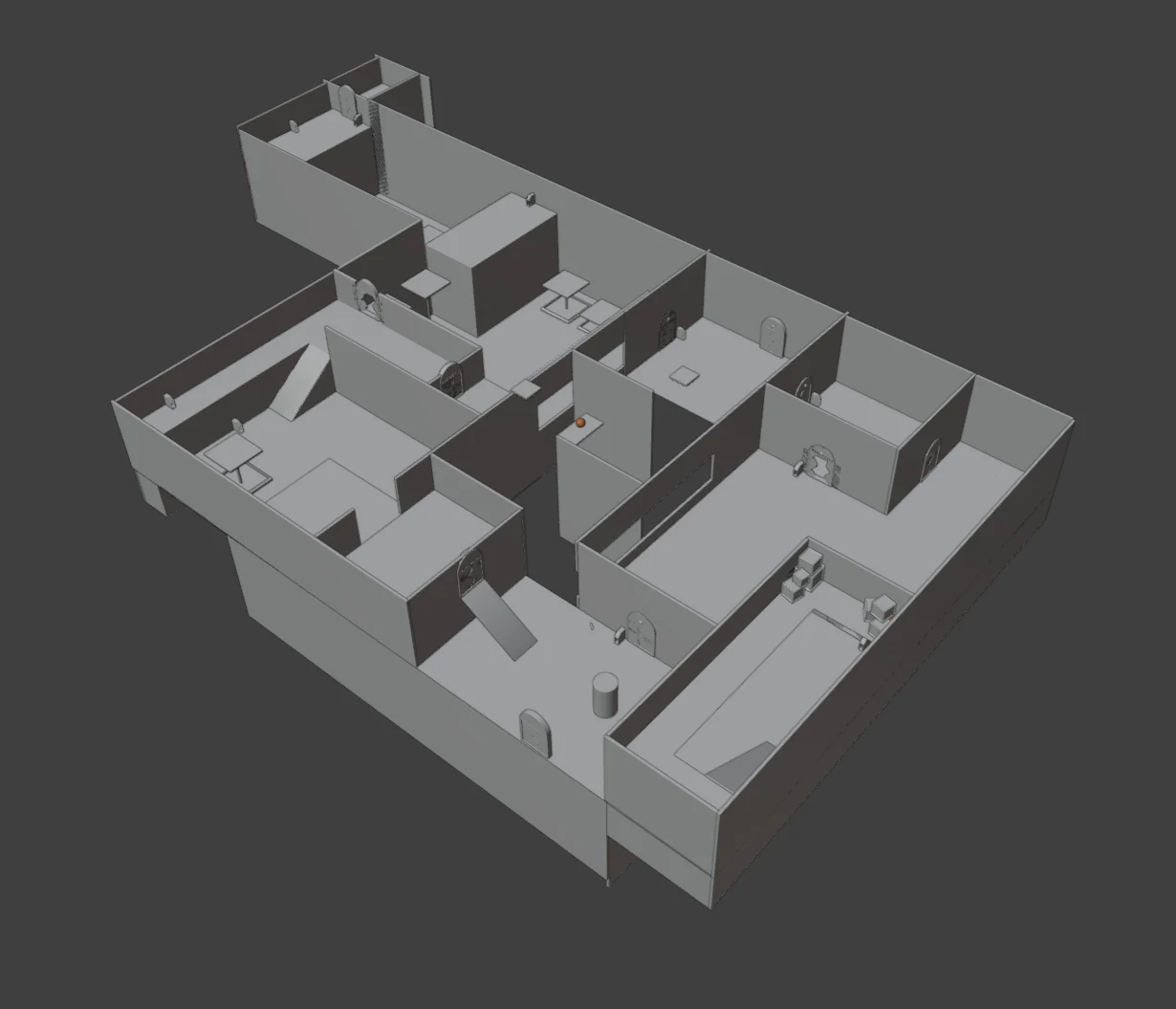
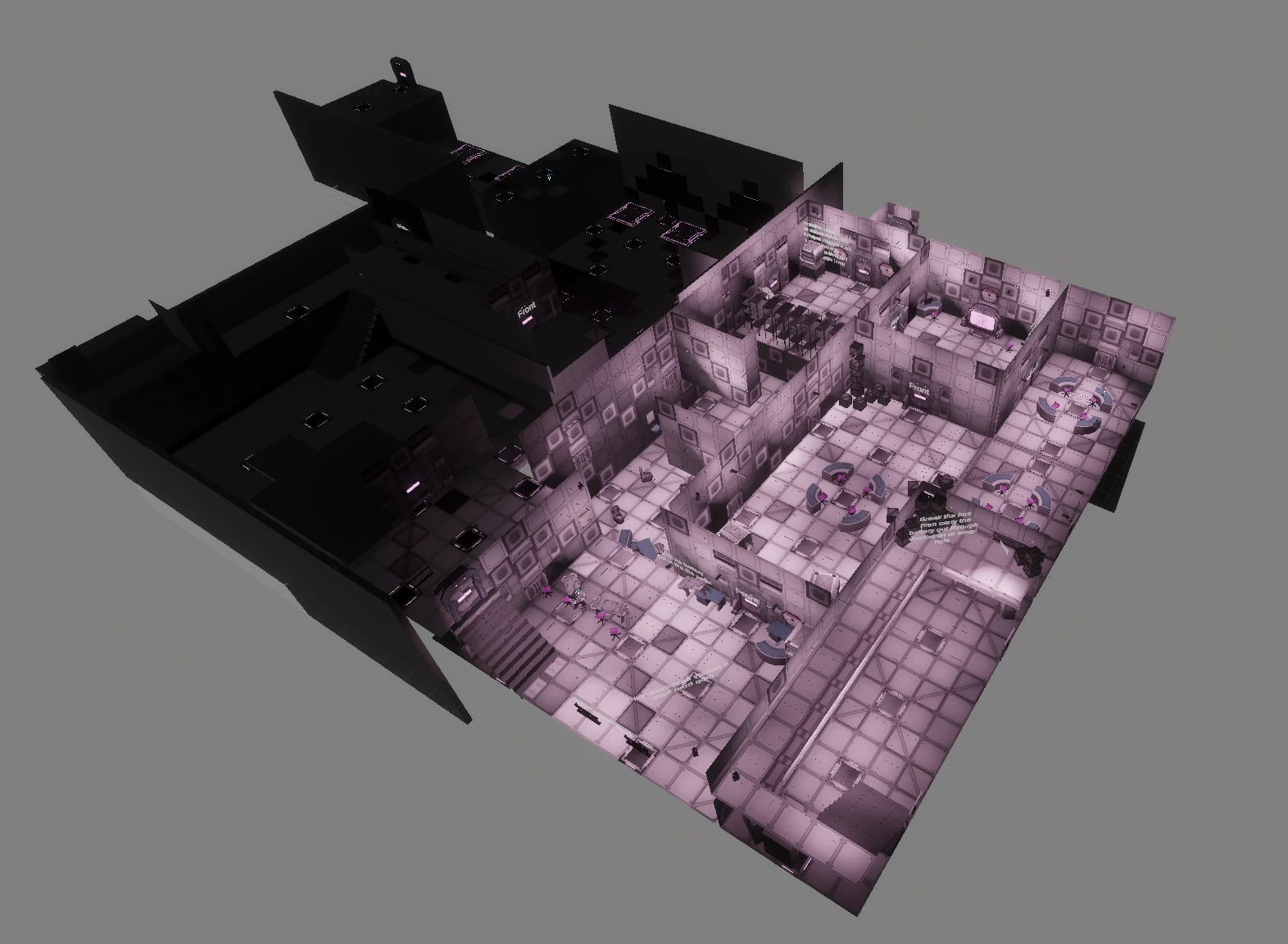
Early versions focused on basic traversal, room connectivity, and core interaction logic. Later passes added stronger environmental framing, more readable gameplay objects, denser detail, and a more complete visual language while preserving the underlying level structure.
Early Development
Traversal and core interaction logic.
Later Playable Build
Environmental framing and interaction presentation.
Early version
Basic traversal, room structure, and core interaction logic.
Later version
More complete environmental presentation, clearer gameplay objects, and stronger spatial framing.
Iteration rationale
Refine readability and presentation without losing the original gameplay structure.
06 / ASSETS BEHIND THE SPACES
Environment & 3D Art
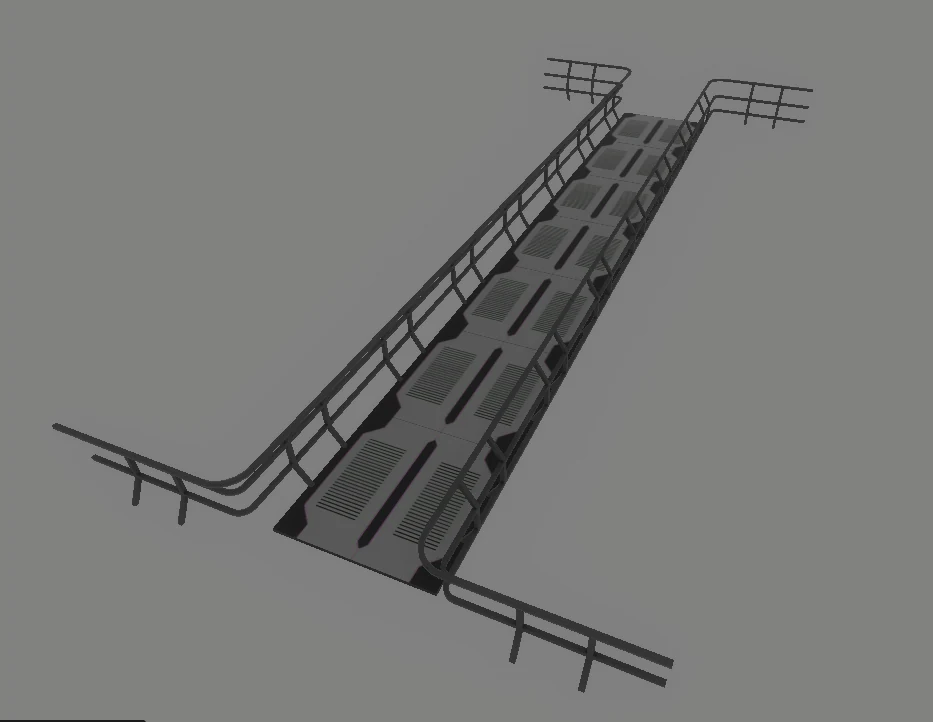
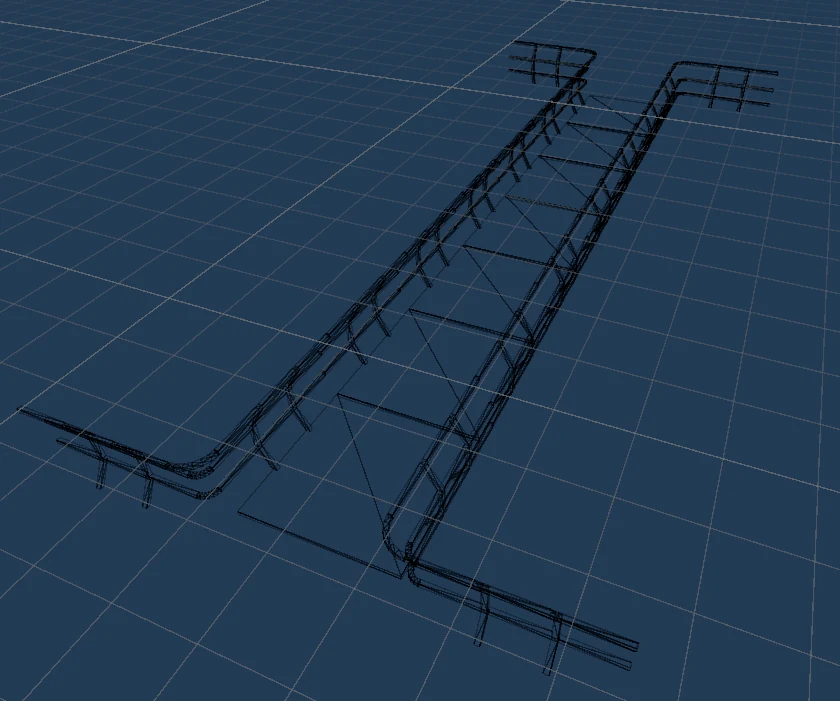
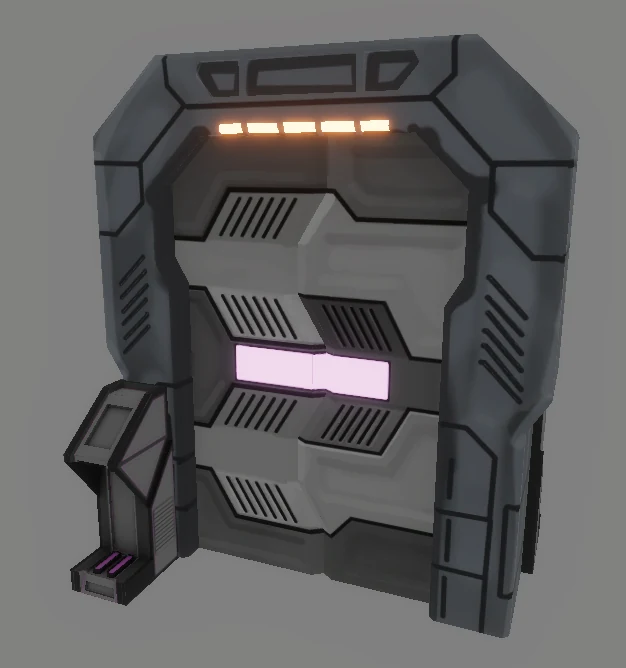
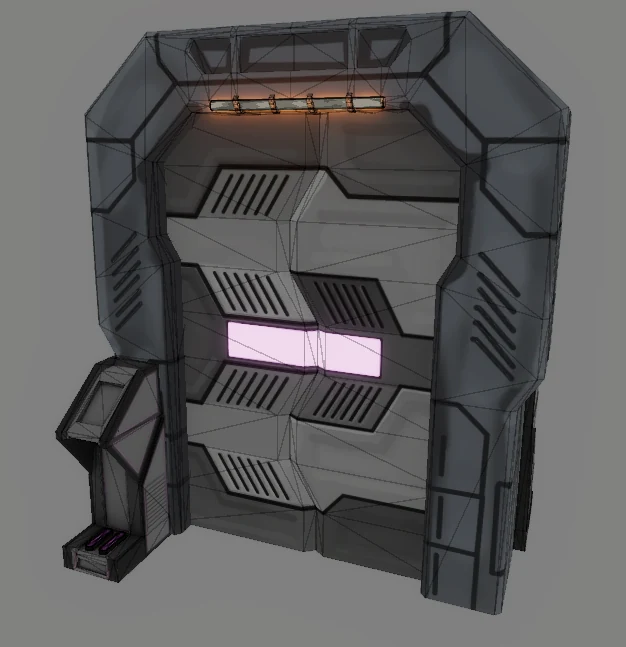
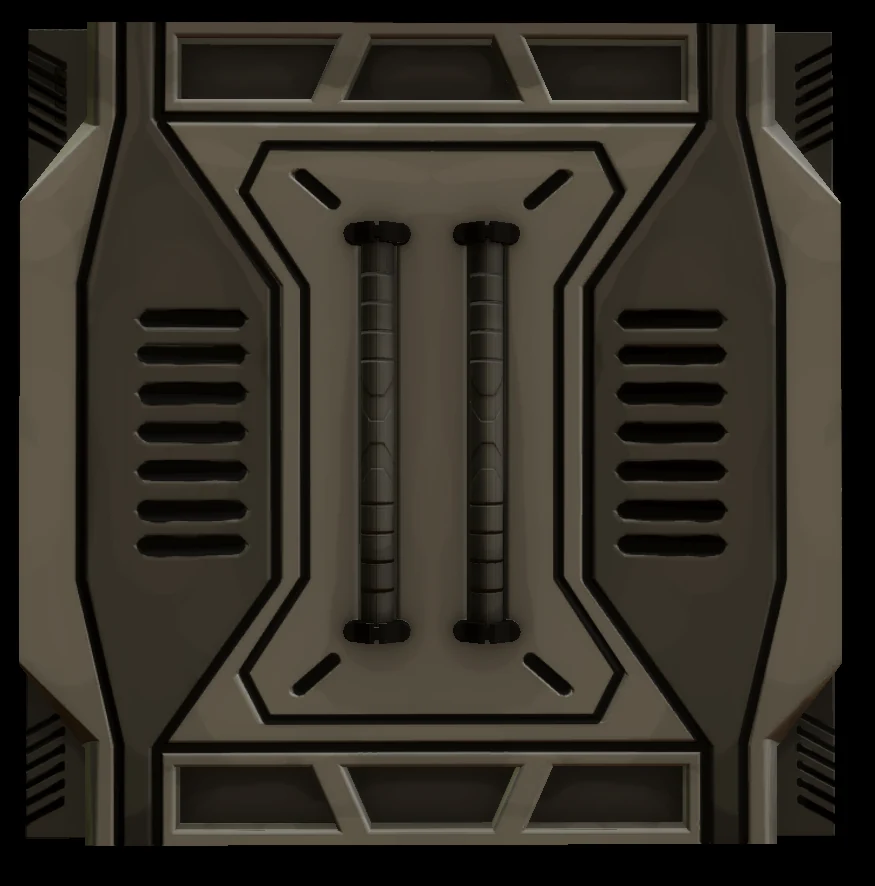
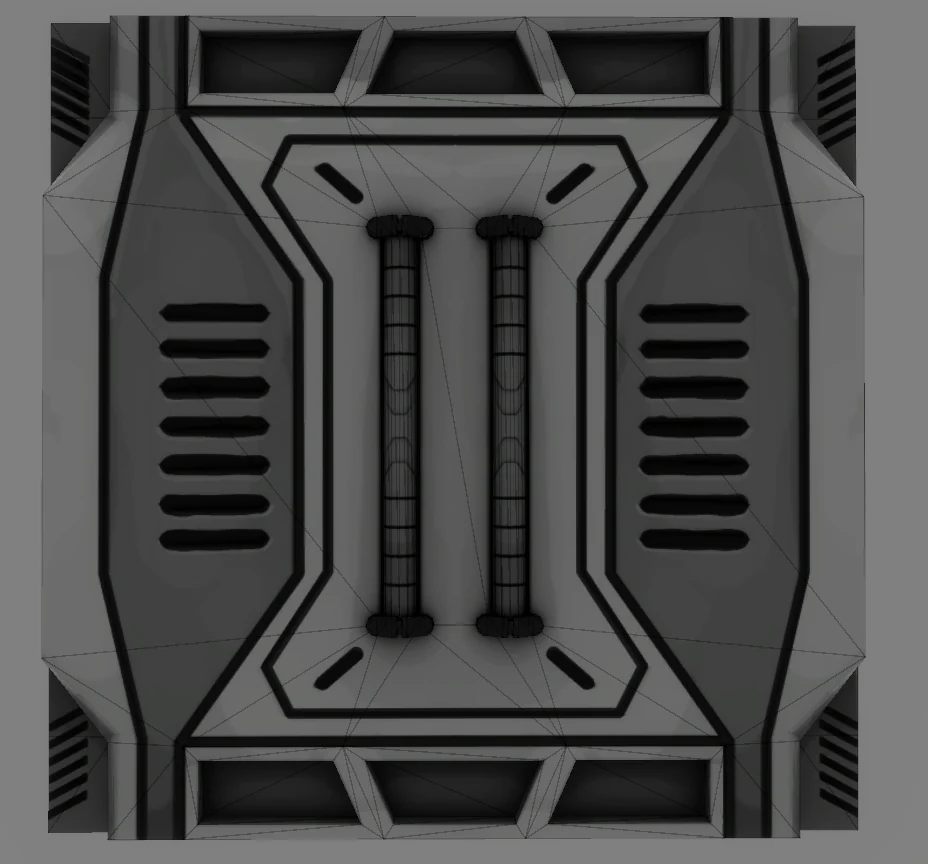
I created a small modular environment kit to support rapid room assembly and a consistent visual language. Reusable architectural pieces and gameplay-facing assets helped move spaces from greybox into cohesive final environments without rebuilding every room from scratch.
Bridge
Final
Wireframe
Door
Final
Wireframe
Floor / modular panel
Final
Wireframe
07 / PAX EAST 2026
Public Playtesting
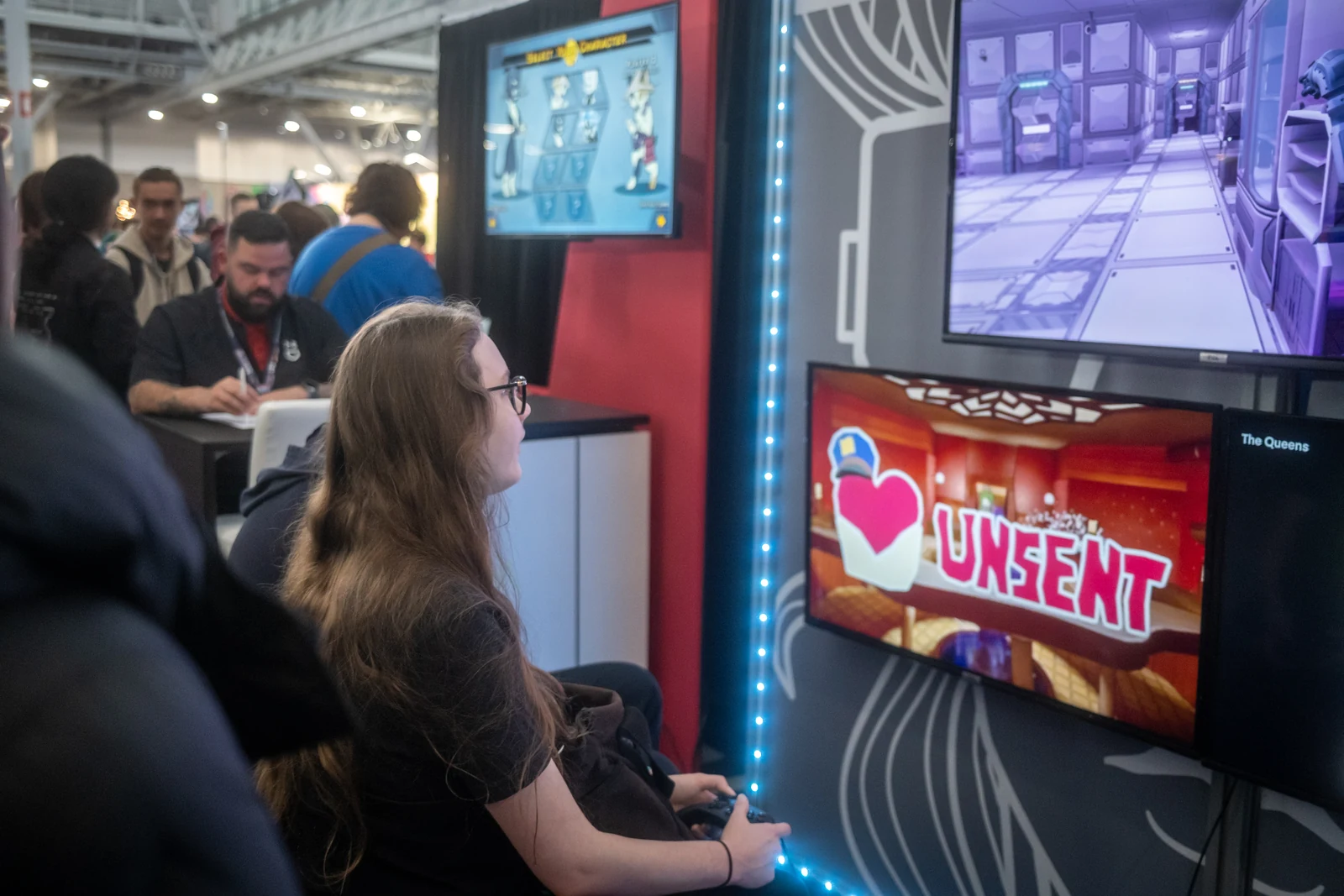
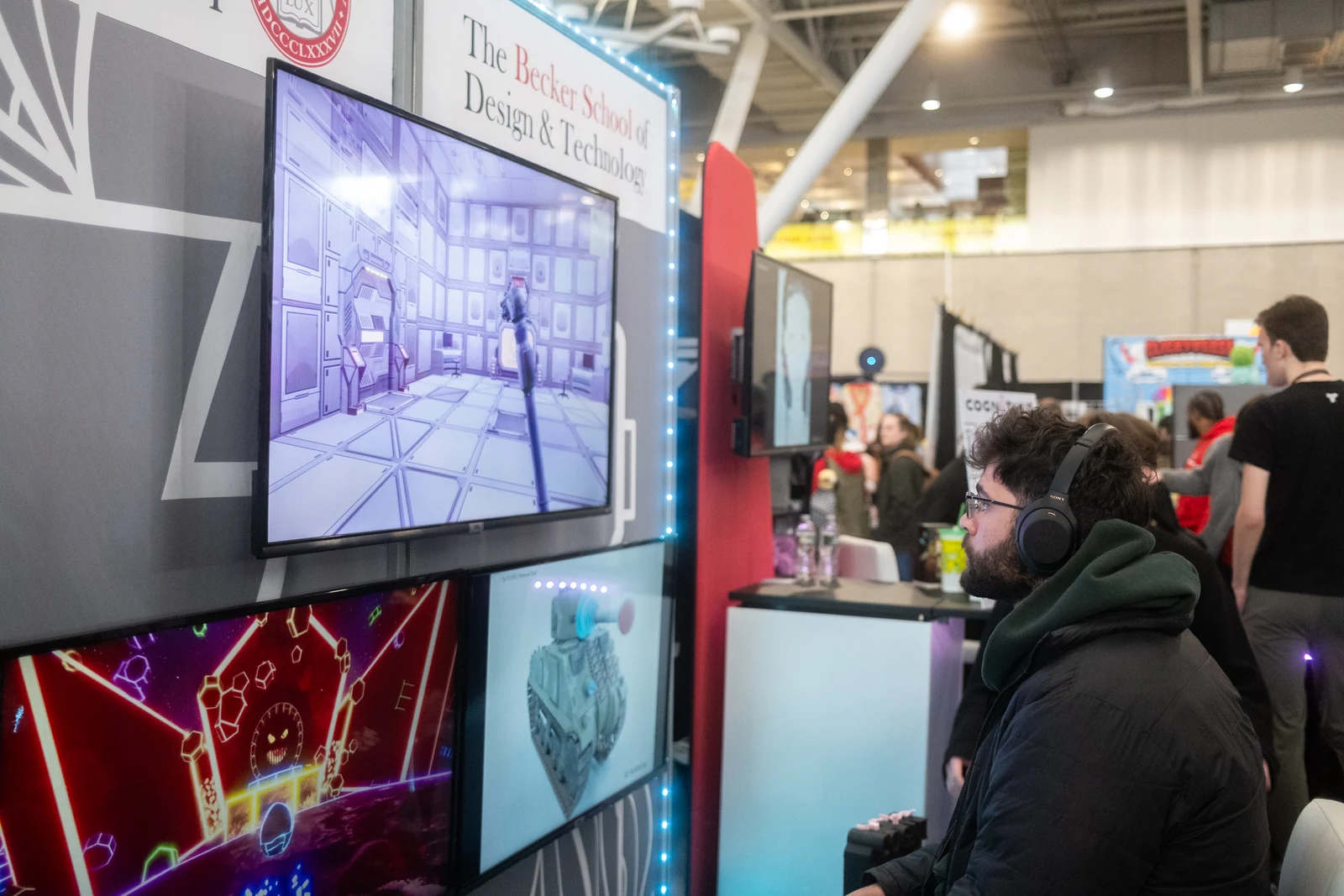
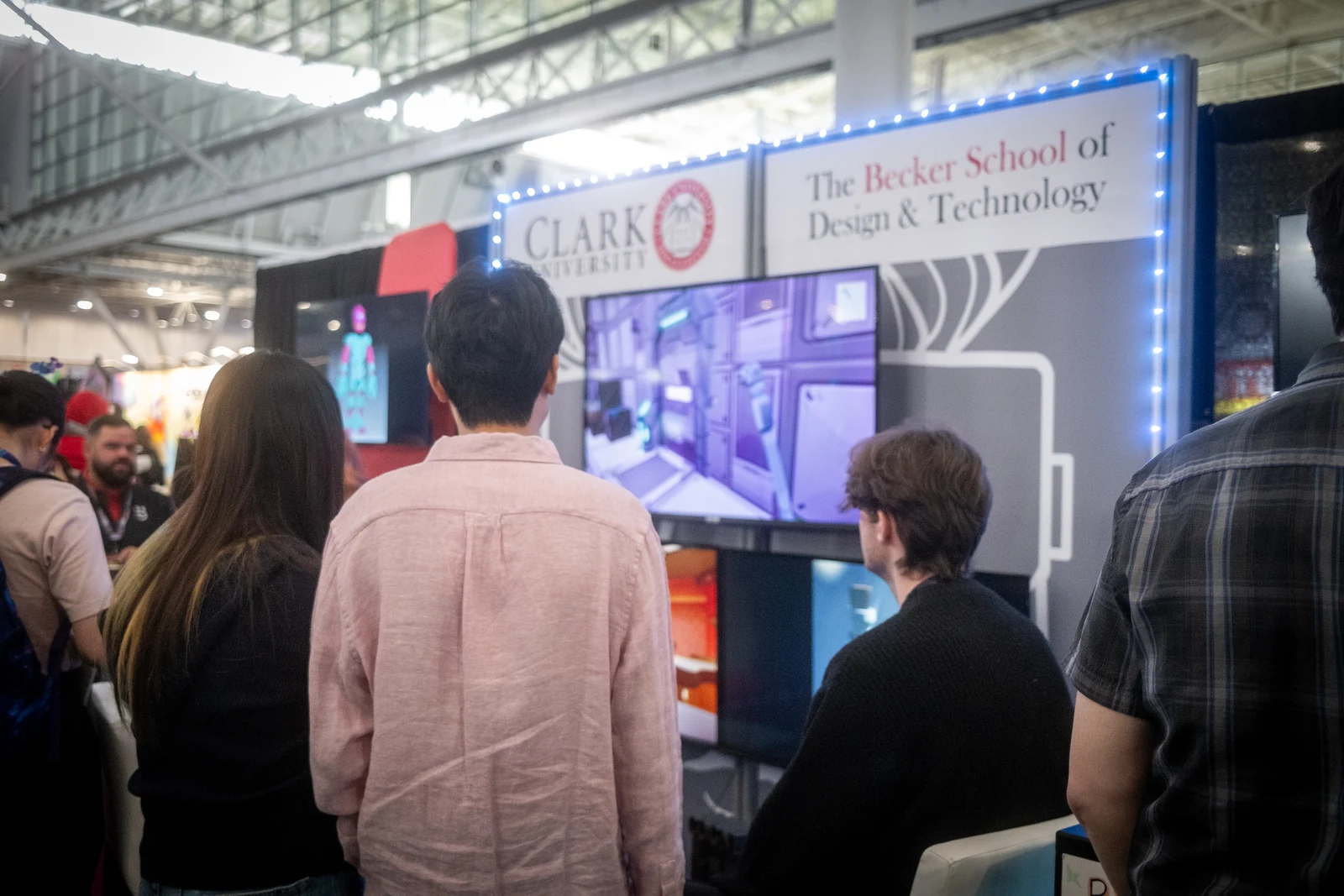
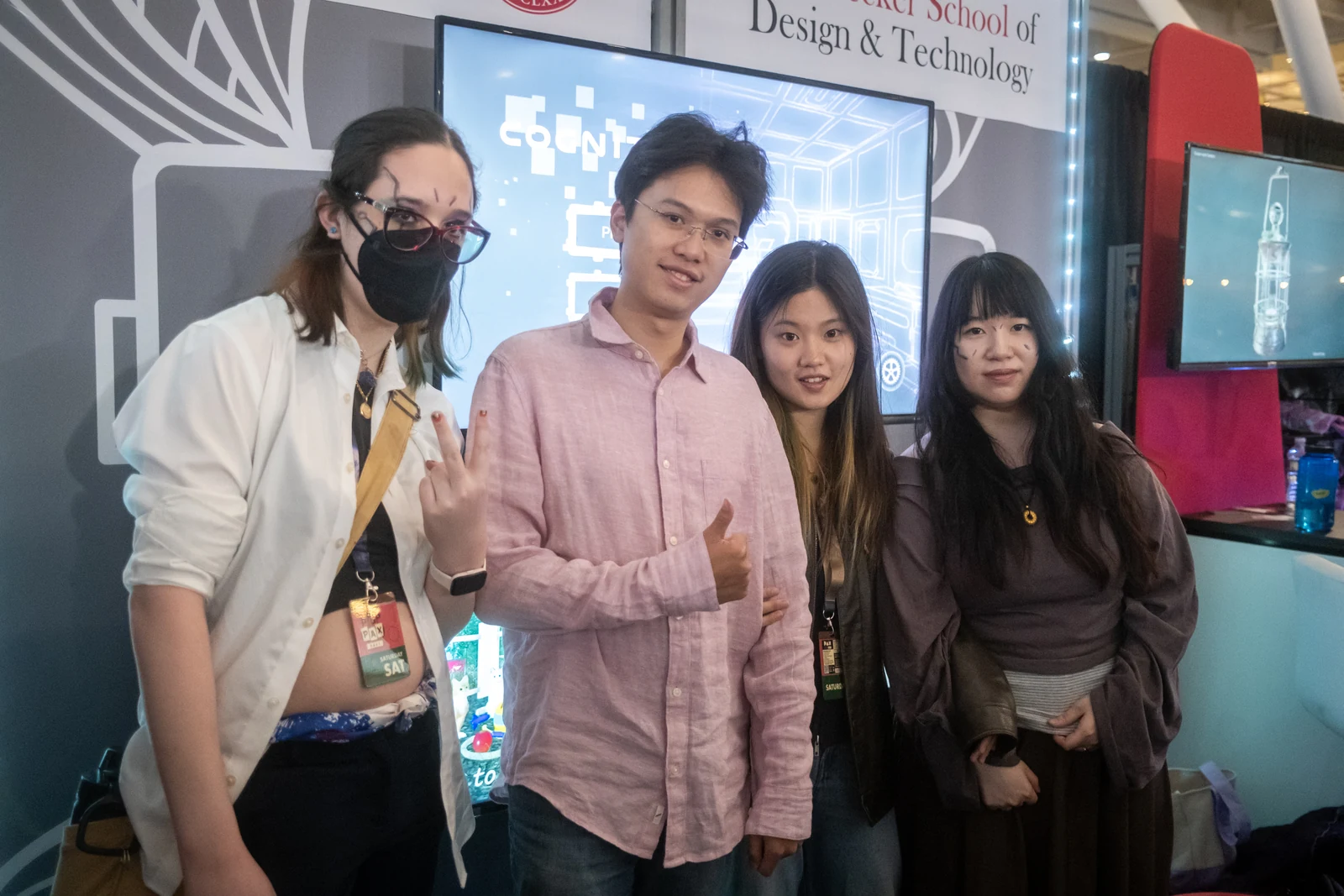
Cognitive was presented at PAX East 2026 as part of the Clark University / Becker School of Design & Technology showcase, where visitors were able to play the project in a public exhibition setting.
Visitors playing Cognitive
Gameplay on the showcase floor
Clark University / Becker School showcase
Cognitive team at PAX East 2026
08 / STUDIES OUTSIDE THE PLAYABLE BUILD
Explorations & Cut Spaces
Unused greybox study · not part of the final playable build
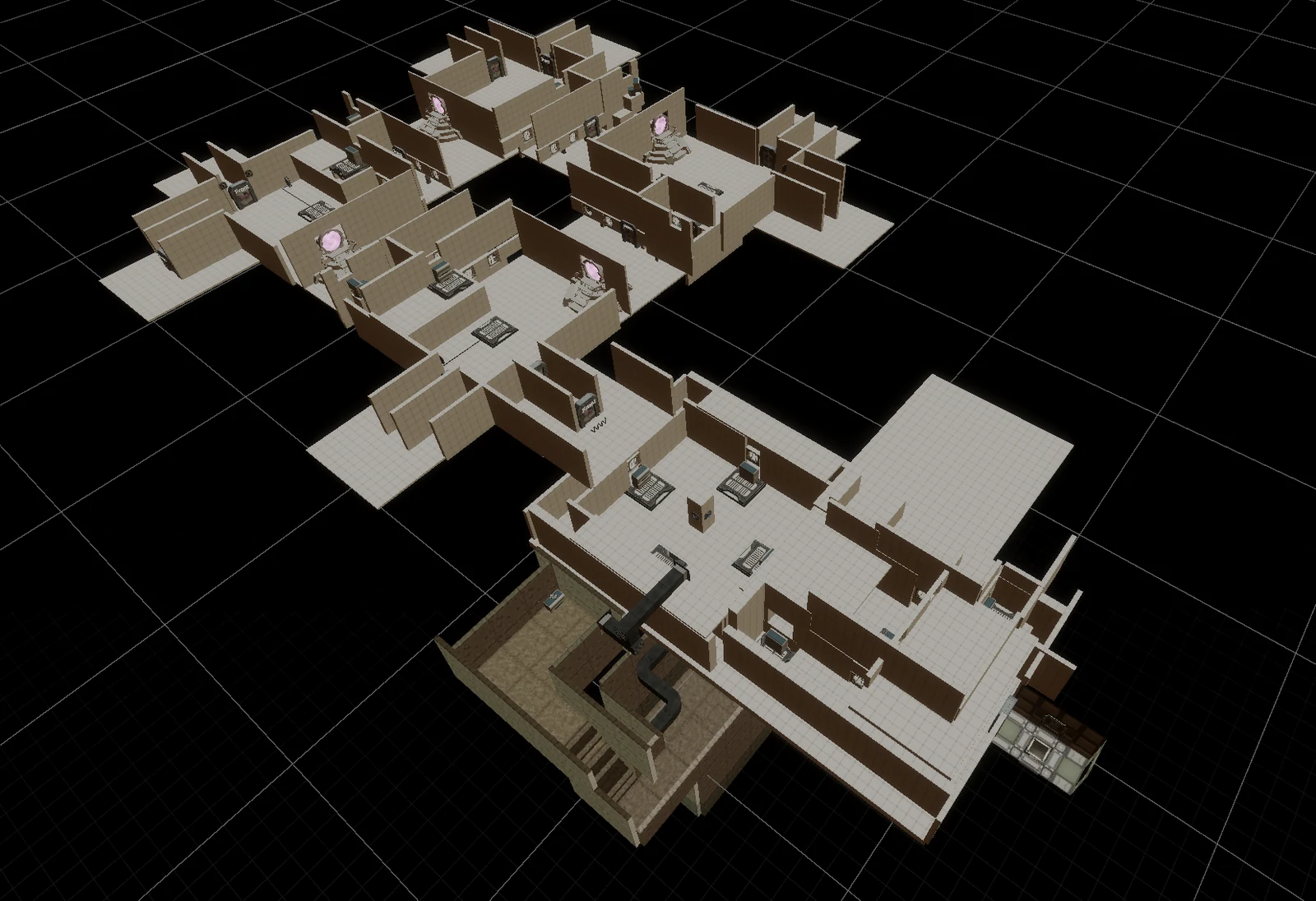
Not every explored space made it into the final playable build. These greybox studies were part of the level-design iteration process, allowing ideas to be tested before production time was committed to final environment work.